
We staged the last performance of Pibroch’s 2023 tour at the Woodend Barn in Banchory, about 20 miles outside Aberdeen, where our journey had begun in April.
The Gateway to Royal Deeside, Banchory quickly established itself in the early years of the oil boom as a favoured commuter suburb especially for companies, such as Shell, based on the South side of Aberdeen. The mansion houses and villas along the Deeside corridor speak of both traditional Aberdeenshire affluence and the influx of money that attended Aberdeenshire’s 50 year romance with fossil fuel extraction.

Scottish Index of Multiple Deprivation : Scotland 2020
In 2022, when average house prices in Scotland were £185k, the average house price in Banchory was 303k. It is a town that can afford transition to EVs at a household level (generally) though, as well as high-end Teslas, the streets still host their Porsches, Ferraris and SUVs.
The audience for the 35th anniversary performance at the Barn was savvy, well-informed and open to discussion.
There had been a memorial service for those who had lost their lives in the Piper disaster that afternoon at the Memorial at Hazelhead Park in Aberdeen. Though covered in the local and industry press, the event had received no obvious coverage on the BBC. What had been covered that morning on the BBC website were the statements of Shell’s new CEO, Wael Sawan, that “Cutting oil and gas production would be “dangerous and irresponsible”” and that “the world still “desperately needs oil and gas” as moves to renewable energy were not happening fast enough to replace it.”
Sawan apparently told the BBC correspondent that, ”What would be dangerous and irresponsible is cutting oil and gas production so that the cost of living, as we saw last year, starts to shoot up again.”
Because it is the ‘cost of living’ not the ‘price of dying’ that matters.
As I write this, on 31st July, Rishi Sunak is in Scotland announcing that 100 new oil & gas licenses on the UKCS are to be made available and that his government are today announcing a joint commitment to undertake future licensing rounds, which will continue to be subject to a climate compatibility test.” In announcing these new licenses and a number of CSS projects, Sunak is committing to burning more hydrocarbons. His explicit reason as articulated are to 1) ‘protecting critical jobs in every region of the UK, safeguarding energy bills for British families and providing a homegrown fuel for our economy’ and 2) ‘to power up Britain from Britain so that tyrants like Putin can never again use energy as a weapon to blackmail us.’ (Grant Schapps)
Though this is more likely to be criminal short-termism of a Tory party who believe anti-green policies may attract votes, as may have happened at the recent Uxbridge and Ruislip by-election. After the by-election, Sunak announced an intention to review proposals for Low Emission Zones in cities so that people can “use their cars to do all the things that matter to them”. Presumably long-term survival is not viewed as mattering to Tory voters.
Moreover, today he asserted that “”If your approach to climate change is to say that no one should go on holiday, no one should go on a plane, I think you are completely and utterly wrong.” Well..I guess we disagree on that (personally).
Sunak has said that granting new licenses are “”entirely consistent” with net zero commitments.” Not an engineer then. Nor a humanitarian. A 5 year planning horizon without conscience.
During the 2nd Gulf War I knew a lot of oil & gas professionals who profoundly disapproved of the war and were, correctly, pessimistic about it’s consequences. Yet a great number of us, myself to a limited extent, re-engaged when the shooting died down (a bit). Because, as it says in Pibroch, that’s “what we do – keep going.” And we are fond, after all, of our upper decile 20th century lifestyle.
This is the moral hazard of myopic politicians like Sunak endorsing further exploration and production.
This said, I thought the post-show discussion on the 6th July was poignant and, as always, thought provoking. I felt the discussion was characterised by:
- Pragmatic despair
- Hope in unrealistic solutions
- Recognition of buck-passing
- Disillusionment with contemporary political processes
Maybe that’s where we all are, most of the time: but where do we need to be?
Here are some of the things I heard about Climate Change in Banchory
I heard that Armand Hammer had a close connection with Stalin
I heard that blame isn’t helpful: That the Cullen Inquiry represented a societal response to learn lessons and move on.
I was asked: How do we change the system?
I heard that cutting back on Fossil Fuel production is dangerous.
I heard that it was widely known that Oxy platforms were particularly unsafe
I heard that governments are imposing more and more restraints and legislation to suppress protest.
I was asked: How can we progress if we have no faith in our politicians?
I heard it said that “The question is how many folk died in total in the North Sea and what was the total workforce?”
I heard that there are many old people in poverty.[1]

I heard the question asked “Dangerous to who?”
I was asked: How do we carry this conversation forward?
I heard that you cannot eliminate risk.
I heard that we have a capitalist system that still pursues growth (and drives the problem).
I heard that this is a crisis in which hundreds of millions of folk are exposed.
I heard that the industry did make systematic change after 1988 – especially around safety culture – personal ownership of collective safety.
I heard that no-one wants to give anything up.
I heard that the world will desperately need Oil & Gas for decades to come.
I hear that it will be chaos.

Materials and welds on the Piper platform had evaded certification.
I heard that young people are more hopeful than we are: that they don’t have the same materialistic attitudes.
I heard that we are all boat people.
I heard that parents resist multi-year small schools.
I heard it asked: at what level do we redefine the polis/polity – community, states, the world?
I heard that it is not nation states but corporations that are in control.
I heard that the Arts are important in elaborating & articulating the predicament by linking the scientific and political to the personal.
I heard that, in a recent sit-in, protestors formed a knitting circle.
I heard that the HSE statistics for the North Sea are available online.

I heard that we are stuck inside a system.
I heard that this is happening now: that the boat people ARE climate migrants.
I heard that the SSEN are talking about putting pylons all over the landscape.

I heard that we need to be playful in our resistance AND there have to be cakes and ale.
I heard that every community is affected.
I was asked how many folk associated with oil & gas came to the show?
I heard that the 35th memorial service for the Piper Alpha victims had taken place that afternoon in Hazelhead Park but there was nothing about it on the BBC website.
I heard someone cite the metaphor of a coffin road : that we need to take the time to grieve together.
I heard that Dennis Thatcher was chairman of Burmah which became BNOC which became Britoil.
I heard that Banchory is a community that cares.
I heard that Fortress UK won’t save us.
I heard that Electric Vehicles driving in so much high emergy metal consumption.
I heard that the UK electrical infrastructure will not bear the weight of the government’s aspirations.
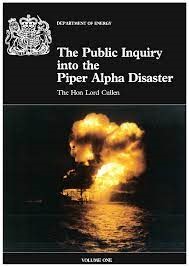
I heard that the most poignant thing in the Cullen Report was the radio messages from those still in the TR as the disaster unfolded.
I heard an ex-Shell employee say she hadn’t read the report since 1989 but it was circulated as soon as it was published and all engineering staff were made to read it.
I heard that I should do verbalisation workshops (with young people).
I heard that, even for young people from prosperous middle-class back grounds, owning a home is an unrealistic dream.
I heard that The Barn is committed to environmental issues and people’s assemblies.
I heard that there is too much emphasis on growth and none on redistribution
I heard that you get the politicians and parties you vote for
I heard that governments North and South of the border are becoming increasingly authoritarian
I heard that the boiled frog myth is a myth.
I heard that itis more carbon-efficient to run your fossil-fuel car into the ground than replace it prematurely with an EV.
I heard that the younger generations will have to mop up for us.
I heard that the cost of living is important but…
I heard that community asset transfers are themselves problematic : simply transferring responsibility back to the community.
[1] Note: the percentage of children currently in poverty is 24%.
