
We are half way through the journey which is Pibroch’s 2023 Tour of Scotland. We’ve engaged and entertained audiences in Aberdeenshire, Shetland, Caithness, Sutherland and Na h-Eileanan Siar.
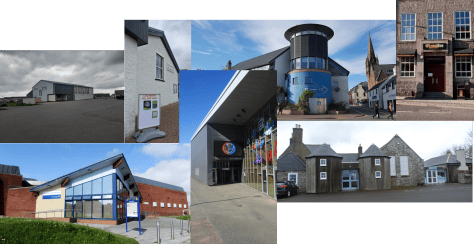
We’ve gotten to know theatre staff, arts organisers and hall committees at the Lemon Tree, Peterhead Community Theatre, Mareel, Lyth Arts Centre, An Lanntair, Taigh-Chearsabhagh & Lochinver. Such diverse voices, such diverse places – so much insight and goodwill. And WILLINGNESS.
Our audiences have included people who were intimately associated with the Piper Alpha disaster on 6th July 1988 – men who were on the platform or nearby in the 24 hours after the explosion. Folk with personal insight into the subsequent inquiry. Folk who have worked in the industry and have their own ‘near miss’ tales to tell.
And, of course, our audiences have been folk struggling with the Climate Emergency in their own day to day lives, immediately affected by change or struggling with the social and ethical challenges that change is bringing.
And folk have said great things.
“Mesmerising.” “Powerful.” “Enjoyable” “Thought provoking.” “Layered.” “Hefty.”
The blending of science and art, the juxtaposition of Piper Alpha and the Climate Emergency has been praised. And I got a ‘mammoth bosie’ from a member of the audience I’d never met.
What has struck me most is the diversity and complexity of local and global issues. The effort put in to trying to understand both what is happening and what individuals should do. The blogs which follow on from each have attempted to precis each conversation and some of the reading and research that the post-show discussions provoked. It is too soon yet to draw conclusions…perhaps it’s presumptuous to imagine doing so. But the ‘what I heard’ model provides, for me, a soundscape and a word-map – a vocabulary of perspectives which is shaping (and transforming) my perspective on Climate Change and the ‘perfect moral storm’ [1] in which we find ourselves.
I have held the view that Climate Justice needs to address Global Justice and Inter-generational Justice – including a means to address past wrongs for communities rendered more vulnerable to Climate Change by those wrongs. What has struck me during the first half of our journey has been the dangerous parallels between the history of exploitation and clearance in the North of Scotland during the 19th and 20th Centuries and the risk that those patterns will be repeated in the 21st Century in the service of ‘national’ mitigation and adaptation.
As noted in the blog What I Heard about Ethiconomics, the levels of inequality – both intranational and international – are now at similar levels to those at the turn of the 19th Century. So the behaviours of entitled oligarchs like the Baron William Vestey, Sir James Matheson, Sir John Gordon of Cluny or Lord Leverhulme should not be viewed as a ‘thing of the past’…worse still we should not write them off as ‘men of their time’.
As Brecht wrote in The Resistable Rise of Arturo Ui,
If we could learn to look instead of gawking,
we’d see the horror in the heart of farce,
If only we could act instead of talking,
we wouldn’t always end up on our arse.
Don’t rejoice in his defeat, you men!
Although the world stood up and defeated the bastard,
the bitch that bore him is in heat again.[2]
Though, of course, the proposition that ‘he’ ever was ‘defeated’ is very questionable.
Or, as in Confidence from the Pibroch performance and collection,
That’s what happened last time.
Why should this time be any different?
Those who accept the need for change struggle with the means – and what those means might mean for them.
Are current fisher lifeways to be sacrificed to compensate for the over-fishing by large commercial enterprises and the abolition of the three- mile limit by the Conservative Government in 1984 (not, it should be noted, re-instated by any subsequent government of whatever hue)?
The Highlands and Islands, throughout the 18th, 19th and 20th centuries have been sacrifice zones to the interests of the rich and getting super-richer (and ennobled to boot!)
And this pattern is not restricted to the rural: immediate parallels were drawn with the ongoing resistance to the loss of greenspace in Aberdeen – St. Fitticks – Torry’s last green enclave being sacrificed to the greenwashing of Aberdeen’s Energy Transition Zone.[3]

The need for a Just Transition feels absolutely clear – absolutely in line with the espoused values –but justice for whom? The scale of ‘sacrifice’ in the affluent ‘Global North’ – even with the systemic poverty that endures for many – is dwarfed by the current and future suffering in lower latitudes whose populations have already been enfeebled by centuries of imperialism, colonialism and exploitation. But, judging by the discussions so far, the probability of imposing sacrifice on local populations in the interest of the remote 5% seems very real.
Time to queer the pitch, I think.
The next few weeks will take us to the more populous areas around Scotland’s Central Belt – former colonial entrepots like Greenock and Dundee (Broughty Ferry), now substantially deindustrialised, the government centre in Edinburgh, the University Town of St. Andrews, the Ayrshire town of Irvine, once dominated by the nearby ICI-Nobel explosives factory.

Perspective there may differ but I hope rich discussion will be provoked in the audiences we engage with. I am looking forward to sifting and recording whatever I hear in the journey ahead.
Booking available through the link below:
References
[1] The Perfect Moral Storm, Stephen M. Gardiner, OUP
[2] https://www.scribd.com/document/382934147/Arturo-Ui-Final-Speech
