
So, let’s open up the old wound again: ‘Poetry makes nothing happen[i]’… is bollocks!
And, whilst I’m side-swiping Wystan, the notion that no one cares (or notices) ‘the fall of Icarus’, though cleverly constructed by both Auden[ii] and Breughel[iii], underlines (or misses) the ironic point that the Icarus-meme has been passed from mouth to ear to mouth to page to eye for at least 2500 years[iv]. The story matters.
And yes: The words of a dead man//Are modified in the guts of the living[v]. Just as the stories MacDonagh and MacBride//And Connolly and Pearse heard,converted into action, are modified in the ‘gut’ of Yeats’ poetry[vi].
Activism OR poetry…or poetry AND activism…or poetry performance AS action?
Auden’s khudozhnik[vii] sensibility contrasts with the inspirational perspective recently expressed by Joelle Taylor in her post A dream cut out of the air[viii].
‘poetry ha[s] purpose, […] it [can] be used in unexpected ways to help others: to build literacy, to instil emotional literacy, to create confidence, to analyse ideas, to have fun, to cause a riot, to unpick political thought streams and ideologies, to fathom identity, to learn a language.’
Poetry and/in performance has the power and potency to inspire and incite change and, in its memorial character and the intimacy of provenance, to sustain engagement.
As I’ve outlined in previous posts, the germ of the idea of Pibroch originated as part of an act of protest. Since that time, in 2019, it has evolved through page to performance to reflection (and on again to page and performance).

Between 2022 and 2023, we have performed the work within 15 distinct communities in Scotland, in spaces ranging from village halls to academic conferences to major regional theatres. The format of the work will always include performance AND discussion AND documented reflection – iterating and accumulating over time.
In this context, it is interesting that one of the key themes arising from post-performance discussions over the course of the last two years has been the importance of performance and participation in this ‘activist art’. This post explores insights and ideas that have arisen from the 15 interventions to-date.
Participatory Art as Transmission (not Consumption)
The previous post in this series focussed on issues around Transmission as we confront the challenges arising from the Climate Catastrophe.
Although originally prompted by observations about electricity transmission – and specifically the transmission of renewable energy – it became clear that many other parts of our current ‘transmission’ infrastructure were no longer fit for purpose and require re-imagining: for example, those relating to water, materials, welfare, actionable knowledge and political power.
The ‘Arts’ infrastructure is a key element in the transmission of welfare, actionable knowledge or political power. This was recognised across many of the post-performance discussions: discussions which also recognised that the current infrastructure was, again, inadequate to our needs.
Among the comments which arose from discussion were:
Art – music, song, theatre, poetry, visual arts, making – is how we talk to ourselves, together, about experience, about value. Without art there is no conversation. And yet the current context constricts and suffocates the arts – withdrawing subsidies and charging high tariffs on the spaces in which folk can meet.
Sociality has been commoditised to ‘entertainment’ without the engagement and participation originally embedded in the word. For example, ‘ceilidh’ means ‘to visit’ (a verb) not ‘a dance’ (a noun).
Theatre [live performance] is the quintessential civic art form – bringing a community together for a shared, synchronised conversation
We need to share – through conversation, theatre, sessions, recitations, open mics, karaoke – because we NEED to talk about ‘stuff’.
We want young people to join in our conversations – we want to hear their voices on this topic.
Conversation is a stage of action – a precursor of an agreement to act.
Climate action is always about ‘place’ – places – the ground on which we stand. For, although the problem is global and pervasive – as each increment of emission raises the average global temperature everywhere – the only place we, as human beings, can respond is here and now. In the place we each find ourselves.
Moreover, it became clear that, in the face of the atomisation of agency we each have a moral duty to ‘associate’, in our current predicament.
It is true that the participants in the Pibroch events were a self-selecting, WEIRD[ix] cohort but there was a recognition, echoed in the recognition of the urgent need for community-based Peoples Assemblies[x], that participation needs to be
- broad,
- reflective of the diverse interests & desires of different members of the community
- conversational
The work – and the performance – are, therefore, only part of the ‘being together’: a conversation piece – the prompt for an informed, generous and, hopefully, action oriented ‘post-show’ discussion.
Time out of sync
There is strand in current historiography which considers aspects of (any) contemporaneous history as in-sync or out-of-sync.[xi] Whether based on the most basic human impulses to dance, chant or drill together[xii] or reflecting a more (or less) conscious need to establish ‘social harmony’, it is argued that society constantly strives to bring itself ‘in-sync’ despite the fact that some elements of society (or its ‘landscape’[xiii]) are always ‘out-of-sync’.
O’Neill[xiv] argues that we achieve a great sense of well-being and potency from being together ‘in-sync’ – whether we encounter this in the square-bashing of military drill, the coherence of a Virginia Reel or the shared singing of a hymn[xv]. Being together, sharing whilst recognising our individuality, is ‘bonding’.
In the face of Climate Change, contemporary civilisations are profoundly out-of-sync.
- Out of sync with our ‘landscape’, which is changing at a rate unprecedented[xvi] in 12,000 years.
- Out of sync with our children and grandchildren and the future weal of our species.
- Out-of-sync with the poor and vulnerable.
- Out of sync with the needs of most other life-forms on the planet.
- Out of sync with our espoused ethical constructs and values.
From the dysfunctional COP process to the expressed recognition that meaningful change demands a paradigm shift but no-one wants to lower their standard of living, radical out-of-syncness characterises our individual, communal and collective condition.
How, then, do we create infrastructures capable of putting communities and polities in-sync in the face of the challenges we face?

In ancient Athens, attendance at the theatre was, essentially, a civic duty for citizens, with their ‘tickets’ paid for them by the state.[xvii]
Shared memes – typically abstracted from ‘richer’ and more nuanced work – create a short-hand identity. And poetry is, at its best, designed to be memorable.
Being together, focussed on a shared topic or activity, encourages empathy and solidarity.
Being together can, of course, take sinister forms: consider the spectacle of the Nuremburg Rallies or the jingoism that characterised the beginning of so many conflicts, from the Napoleonic Wars to the (latest) Iraq War. As explored in a recent post – Opportunity Knox – radical synchronisation is likely to restrict individual freedoms (even as it enhances communal justice).
In the course of our 2022-23 tours, the Pibroch project was described (positively) as ‘a bardic project’[xviii], as needing to be ‘evangelical’[xix]. It was suggested that we ‘crowdfund the project to take it around all the schools’.[xx]
Whether bardic, evangelical or pedagological [xxi] or all three, it seems essential that the ‘work’ is ‘grass roots’, not elitist (not khudozhnik[xxii]). It is performed in intimate (or at least connected spaces), grounded in a shared communal time and place. Whereas the time undoubtedly needs its ‘saints[xxiii]’ and ‘prophets’, its success depends on the charisma and connectedness of na daoine[xxiv] rather than the authority and cribbed sermon-books of sticket-ministers[xxv].

Climate Change as Genre
Other voices, other genres haunted Pibroch during our travels
The foreshadowing of 7:84’s work in the 1970s was always in view, whether in questions : Were you influenced by The Cheviot, the Stag and the Black Black Oil?[xxvi] Or the physical presence of an original poster for 7:84’s 1973 tour in the Green Room at An Lanntair.[xxvii]

Other engaged practitioners entwined and connected with our journeys. Penny Chivas dance work, Burnt Out, was touring in the same time-frame and spaces[xxviii].
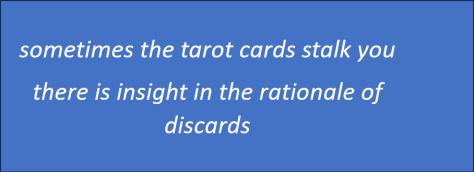
Rebecca Sharp was exploring and articulating climate themes as part of her residency at the Centre for Energy Ethics at St. Andrews. Rebecca’s use of tarot and aspects of augury to co-create collaborative art provides a new avenue of practice in sharing and elaborating our hopes for the future and fears in the present[xxix].
Geopoetry and geopoetics were being practiced across a range of venues and media, from Jonathan Baxter’s work at St. Mary’s Cathedral in Edinburgh and his collaborations with poets like Helen Boden to the work of collectives like Ceasing Never and explorations of Geopoetry & Deep Time in conjunction with the Royal Geological Society and the Anthropocene in the film poems of Sarah Tremlett.

Steve Garrett’s spell-binding musical and audio- visual work, The Song of the Ice[xxx], and its post-show discussion provided both information (Steve is an Earth Scientist with a long association with research in Antarctica) and insight.

Rich and engaging work flourishes in poetry, theatre, music, dance, visual art and, yes, film.
In the course of discussions, I was offered reading lists[xxxi] and critical insights. In recent days, the work of Jorie Graham, To 2040, has again wakened me to the urgency of the predicament and the keenness of the griefs we need to share[xxxii].
What is hell. The/imagination of what is/coming is hell. The light of my monitor/blinks. What will the readout/tell us. Who is us. How will us change/when the readout/arrives. The ice-core update, the new temps for the/arctic depth-sounds, bone scans, outposts on/stars, on cells.
Climate anxiety, climate grief, climate protest, climate alarm-calls form a genre that crosses many media and forms of practice and offers a rich opportunity for collaboration, cross fertilisation, curation and, crucially, participation.

I have written before on ‘effective’ climate communication: but that is communication sited within the current dysfunctional paradigm.

Don’t frighten the children/ horses/ oligarchs!
Yes: there absolutely have to be cakes and ale, playfulness, protest in the form of knitting circles and samba bands, music in major keys to remind us how beautiful life in the world is, even in its remotes or miniscule corners. That joy and rage must be shared not as a topic but as a shiver, a dance, a song, a session, a hug, a chant[xxxiii].
The players in the ‘old’ out-of-sync paradigm are and will continue to construct their own conservative (or libertarian) narratives.

The narratives that the mainstream media tend to offer, whether in reportage around COPs or future-fictions ranging from Zombie Apocalypses to Off-Planet fantasies to Eco-operas[xxxiv], consumed through streaming services, echo and feed our individual sense of helplessness.
Many of these comments arise from a key-note speech given by Stephanie LeMenager at the Centre for Energy Ethics 2023 Conference, Financing the Future[xxxv]. Although Stephanie LeMenager’s remarks focus primarily on contemporary North American culture, the ubiquity of streaming culture saturates the cultural space of modern societies, feeding each of us who partake of it a standard fare of despair and the fantasies of make-it-that heroism.
The challenge of being-together (in art) is to kindle the very real heroism and hope that is needed NOW: not the vicarious heroisms of dystopian fiction (in whatever genre) or the sullen despondency of nostalgic laments.
Theatre & Performance (vs Streaming and Consumption)
I am not unaware of the irony that I am talking to myself here, even as I strive to speak to you and us. And that I do so through the medium of text and social media, that this ‘message’ is stored and publicised via date centres, networks, devices saturated with emergy.[xxxvi].
Ironically (again) I used to think the power of the internet was to ‘disintermediate’ us: I can ‘publish’ these ideas with less regard for gate-keepers, printers, pulp distribution networks…though whether ‘the algorithm’ will ever let it see the light of day is a question.
But, as the inversion of the witticism goes: “Masturbation is all very well but it’s not as good as the real thing.”
To be honest, audience numbers to date have been less than we’d have hoped. We have been ‘warned’ by concerned theatre managers before we went on stage. Audiences ‘have not returned to theatre post-COVID’.
And anyway, thanks to ‘the Arts’, cinema, TV and internet streaming, the default mode of engagement with art is consumption. Not sharing. Not participation.
In the course of our travels, folk told us that:
- live audiences are not returning to An Lanntair after the COVID-19 pandemic in the numbers that were common before the pandemic
- An Lanntair has had repeated requests to stream performances
- there is a growing tension between theatre audiences and film making
- someone had to burn 150 miles of diesel to attend the show
The pandemic (could have) yielded many lessons but one of its primary impacts, coupled with the availability of ‘streaming’ services, has been to undermine community and ‘being together’, even in comparison to the already eroded baseline of 2019!
Entertainment is commoditised and professionalised and the capital-requirements of mainstream, mass-media entertainments constrain diversity and suffocate the intimacy of voices and perspectives.
Pibroch was lucky to have received funding from Creative Scotland and the National Lottery to both develop and tour the show. But, to meet the ‘gatekeeping’ criteria in the current paradigm, the show remains ‘unaffordable’ to small, located venues in. Without that ‘locatedness’, in time and space, however, there is no meaningful possibility of participation. Our individually ‘low audience-numbers’ enabled participation. In a full 1000-seat auditorium, the participants are reduced to consumers (with only the boldest having their voices heard). In a streaming environment, be it YouTube, the BBC or Netflix, we consume in tiny topical or atomised fragments. Faced with the spectacle of walruses leaping to their death into the sea, ‘what is to be done?’
As mentioned in Joelle Taylor’s post, there are, however, alternatives. The Spoken Word circuit and, particularly, Open Mics, open a space for all.[xxxvii] The trad session or jam culture encourages participation (just play every third note!…ideally in key). Before mechanical reproduction[xxxviii] and ‘broadcast’, we had to make our own ‘entertainment’, at ceilidhs, weddings, funerals, symposia, marches, carnivals, religious rituals.
Yes: there is space for virtuosity and practice, but perhaps only to inspire! Every genre has its craft and we need to maintain a critical vigilance around our ‘meaning’.
As Janice Galloway (more or less) remarked about J.S. Bach: if you produce 20 works a year for 65 years, some of them have to be good! Practice improves (and nothing makes perfect). The ‘instrumentalism’ of modern education has disarmed most of us from our aptitude in singing, composition, performance – and the product of the khudozhniks intimidates us from emulating. But, in the intimacy of provenance, approximate Bach might be sweeter than no Bach at all, especially for the performer.
This, again, is an instance of the lack of fitness for purpose of our current infrastructure for creating and sharing meaning.
There is a pressing need to shift from art as commodity, the new ‘opium of the people’, to art as democratic practice and participation: ideally face-to-face, in company, in community.
And there is a need for meditation not mediation. For re-flection.
Memory, Empathy & Imagination
How do you remember all the words? Has been the most frequent comment to-date[xxxix].

We exist in a blizzard of texts, tunes and images, especially in the digitally mediated world. Digitised beauty is, for many of us, at out finger tips: a swipe away (then swiped away). But we have lost both the connection to the scrape and press and sweatiness of creation and the repetitive meditation on that one icon available in the locality: be that an aria, an Artemis, a Madonna, Buddha or a Vanitas.
The move away from private performance and the increase in literacy has atrophied our capacity for memorialisation (sic). Oral (bardic) cultures demanded the devices and habits of memorising whilst sociality (with friends or communities in company) required some capacity for performance.
When I was a child, everyone had their ‘party piece’ (or several). Now even poets & musicians read their words (and dots) off of their tablets or phones (if not a page).[xl]
That we are still capable of memorising, even in WEIRD societies, is evident from our ability to recall and reproduce the words of popular songs – even those we profess to hate. Songs, poems and icons are ancient and current devices for memorising, memorialising and transmitting.
In the course of the Pibroch tours we encountered song, in particular, as the repository of memory (and feeling and sense). In Caithness, Nancy Nicholson shared her song, Who Pays the Piper[xli]. On Benbecula, we heard that Donald Francis MacNeill, an inshore fisherman and musician from Vatersay, has written a song of protest about Highly Protected Marine Areas called, The Clearances Again[xlii]. Other songs mentioned memorialised pit disasters – drawing clear parallels with our memorialisation (in a different format) of the Piper Alpha disaster.
Folk said that ‘songs and poems last – are shared through time and space. Folk join in in the chorus, are part of the remembering. The thought and the feelings persist long after speeches, reports or presentations are forgotten. The arts can explicitly memorialise those lost to climate change the memory of individuals as well as ideas.’
They don’t call them ‘folk-songs’ for nothing!
The traditions and techniques of creating, writing, playing, singing, dancing together need re-discovering so that we can transform the ways meaning and feeling is formulated, communally stored and shared : the transmission infrastructure of a more hopeful future.
After all, as remarked during the Pibroch tours, Imagination has a moral force and is vital to our collective future.
And the past matters too.
Perhaps we must share and feel the worlds imagined, through repeated performance, for it to have sufficient moral force to enable change?
Art as Activism
In the course of discussions, it was said that the response to climate change sometimes goes to the heart of who we are as people/ individuals. The arts have a place in rendering the challenges and the threats more concrete, tangible & visceral.
The most recent IPCC report[xliii] describes the key barriers-to and enablers-of adaptation to climate change. I’ve discussed these in a recent blog in this series on Adaptation. At an individual and communal level, the barriers described include
lack of citizen engagement,
low climate literacy,
lack of political commitment (and perhaps political literacy),
low sense of urgency
In these areas, participatory art has a vital role in rendering the challenges and the threats more concrete, tangible & visceral…in memorialising what is and will be at stake.
As LeMenager says, there has been a shrinkage of consensus reality.
Communities of interest – be they corporations, incels or climate activists – are not communities. By definition they fractionate and separate themselves for kith, kin and ‘landscape’ – the community of place, the ‘local’ biome.
If ‘ecotopias render democracy more fictional […] as they represent a separation of power from politics’, participatory art must stay with the trouble[xliv] acting-in-place: adaptation will be a struggle: there will be losses, we will feel grief as well as love. And it is, in the top-to-bottom sense, political.
This art must be a verb not a noun, a shared practice not a purchased commodity.
In past posts I have discussed Rilke’s poetic assertion: Gesang ist Dasein. As noted in that post,there has been some debate around the translation of Dasein[xlv] into various English versions of Rilke’s poem[xlvi].
Song is being? Song is existence? Song is becoming?
To which we could add: Song is being-together.
Our singing together can inform, empower and inspire to action: not the blood sacrifice of MacDonagh and MacBride//And Connolly and Pearse[xlvii], not acts of resistance (for we’ve gone beyond resisting change), not acts of contrition (though acceptance of responsibility and complicit are vital).
Acts of transformation. Acts of reparation. Sacraments of forgiveness & communion. Political action. Heroic action. Compassionate action.
I always wanted to be ‘a writer’ (khudozhnik). Now I write. And perform and reflect and change (in my own small way). I aspire to art as activation.
ACTIVATE!
[i] Specifically:
For poetry makes nothing happen: it survives
In the valley of its making where executives
Would never want to tamper, flows on south
From ranches of isolation and the busy griefs,
Raw towns that we believe and die in; it survives,
A way of happening, a mouth.
In Memory of W. B. Yeats by W. H. Auden – Poems | Academy of American Poets
[ii] Musée des Beaux Arts by W. H. Auden | Poetry Foundation
[iii] Landscape with the Fall of Icarus – Wikipedia
[iv] Euripides Pasiphae 5th BCE is perhaps the first ‘written down’ version.
[v] In Memory of W.B. Yeats by W.H. Auden (see above)
[vi] Easter, 1916 by William Butler Yeats | Poetry Foundation
[vii] Художник (khudozhnik) – a term for artist in Russian.
[viii] A dream cut out of the air by Joelle Taylor – Rebecca Swift Foundation
[ix] WEIRD : Western Educated Industrialised Rich Democratic.
[x] Ingredients for a decolonial politics – cooking up a future to delight in — Grassroots To Global (grassroots2global.org)
[xi]In Sync/Out of Sync by Helge Jordheim in Historical Understanding: Past, Present & Future, Eds. Zoltan Boldizsár Simon & Lars Deile
[xii]Keeping Together in Time: Dance and Drill in Human History, W.H. McNeill
[xiii]http://projects.exeter.ac.uk/igov/wp-content/uploads/2012/12/DOWNLOAD-Multi-Level-Perspectives.pdf
[xiv]McNeill, ibid
[xv] Come all ye Faithful, The Internationale, Flower of Scotland….whatever.
[xvi] That word again!
[xvii] Or at least Pericles did.
[xviii] Moffat
[xix] Stornaway
[xx] It was also suggested we needed to take the performance to the Scottish Parliament – making a community of interest of the current MSPs and their advisors.
[xxi] I’d hope in the manner of Freire.
[xxii] See above
[xxiii] Greta Thunberg springs to mind as an example.
[xxiv] 418487_vol1.pdf (open.ac.uk)
[xxv] Stickit minister – Wikipedia
[xxvi] The Cheviot, the Stag and the Black, Black Oil – Wikipedia
[xxvii] 2023 was the 50th anniversary of the first performances of McGrath’s play and the 40th anniversary of the Piper Alpha disaster.
[xxviii] Burnt Out — Penny Chivas (squarespace.com)
[xxix] https://energyethics.st-andrews.ac.uk/events/good-till-the-close/
[xxx] https://energyethics.st-andrews.ac.uk/events/steve-garret-song-of-the-ice/
[xxxi] For example, Return to the River by Stanley Diamond
[xxxii] https://www.joriegraham.com/to-2040
[xxxiii] And an associated loss of ‘professionalism’.
[xxxiv] For example, The Rig.
[xxxv] EE2023 | Energy Ethics (st-andrews.ac.uk)
[xxxvi] What I heard about climate change and the digital economy… – A View From the Long Grass
[xxxvii] And why not karaoke?
[xxxviii] The Work of Art in the Age of Mechanical Reproduction – Wikipedia
[xxxix] It helps that I wrote them but committing 40 minutes to memory needed the compassionate support of my co-director, Mark Thomson.
[xl] There are, of course, great and notable exceptions.
[xli] https://www.scotslanguage.com/articles/node/id/446
[xlii] https://www.google.com/url?sa=t&rct=j&q=&esrc=s&source=web&cd=&cad=rja&uact=8&ved=2ahUKEwi-t-Wll7yDAxXcR0EAHUJYDjoQyCl6BAgfEAM&url=https%3A%2F%2Fwww.youtube.com%2Fwatch%3Fv%3D0tzW8EYDDE0&usg=AOvVaw1Nme-0Z5CL5u3o4d7S3K1D&opi=89978449
[xliii] https://www.ipcc.ch/report/ar6/wg2/downloads/report/IPCC_AR6_WGII_SummaryForPolicymakers.pdf
[xliv] Donna Haraway – Wikipedia
[xlvi] The Third Sonnet to Orpheus, Rainer Maria Rilke.
[xlvii] Though that was mostly Pearse’s doing.